SAKSI
GOPALA TEMPLE
Orissa
(Odisha)
The
Deity Who Was Called as a Witness

Saksi Gopala Temple is a very important temple located almost midway
between Jagannatha Puri Dhama and Bhubaneswar, in a town called Saksi-gopala, about 20 km west of Jagannatha Puri Dhama. The
Saksi-gopala Deity here, being 5000 years old, is an
exceptionally special one. It is said that Vajranabha,
Lord Sri Krishna’s great-grandson, installed two Gopala Deities in Vraja Mandala namely Saksi-gopala and Madana
Gopala (Madana Mohana).
The Saksi-gopala Deity is the life-size Gopala Deity
who walked from Vrindavana to Vidyanagara, a town
located 20 to 25 miles from Rajahmundry on the banks of Godavari River in South
India. A great fair is annually held here on the Anla Nabami day in the month of Kartika. Saksi-gopala temple is easily reachable by taxi, bus or
Puri-Bhubaneswar train.
Srila Bhaktivinoda Thakura
gives the following summary of the fifth chapter in his Amrta-pravaha-bhasya.
After passing through Yajapura,
Sri
Caitanya Mahaprabhu reached the town of Kataka (Cuttack) and there went
to see the temple of Saksi-gopala. While there, He heard the
story of Saksi-gopala from the mouth of Sri
Nityananda Prabhu.
Once there were two brahmanas,
one elderly and the other young, who were inhabitants of a place known as Vidyanagara in South India. After
touring many places of pilgrimage, the two brahmanas
finally reached Vrindavana. The
elderly brahmana
was very satisfied with the service of the young brahmana,
and he wanted to offer him his youngest daughter in marriage. The young brahmana
received the promise of his elder before the Gopala Deity of
Vrindavana. Thus the Gopala Deity acted as a witness. When the
two brahmanas
returned to Vidyanagara,
the younger brahmana
raised the question of this marriage, but the elderly brahmana,
due to obligations to his friends and wife, answered that he could not remember
his promise. Because of this, the younger brahmana
returned to Vrindavana and narrated the whole story to Gopalaji.
Thus Gopalaji,
being obliged by the young man’s devotional service, accompanied him to
southern India. Gopalaji
followed the younger brahmana,
who could hear the tinkling sound of Gopalaji’s
ankle bells. When all the respectable gentlemen of Vidyanagara
were assembled, Gopalaji
testified to the promise of the elderly brahmana.
Thus the marriage was performed. Later, the king of that country constructed a
fine temple for Gopala.
Afterwards, King Purusottama-deva of Orissa was insulted by the King of Vidyanagara, who refused to give
him his daughter in marriage and called him a sweeper of Lord Jagannatha.
With the help of Lord Jagannatha, King Purusottama-deva fought the King of Vidyanagara
and defeated him. Thus he took charge of both the King’s daughter and his
kingdom as well. At that time, Gopalaji,
being very much obligated by the devotional service of King Purusottama-deva, was brought to the town of Kataka.
After hearing this
narration, Sri Caitanya
Mahaprabhu visited the temple of Gopala
in great ecstasy of love of God. From Kataka
He went to Bhuvanesvara
and saw the temple of Lord Siva. In this way, He
gradually arrived at Kamalapura, and on the banks of
the Bhargi
River He came to the temple of Lord Siva, where
He entrusted His sannyasa
staff to Nityananda Prabhu. However, Nityananda
Prabhu broke the staff into three pieces and threw it into the Bhargi
River at a place known as Atharanala.
Being angry at not getting His staff back, Sri
Caitanya Mahaprabhu left the company of Nityananda
Prabhu and went alone to see the Jagannatha temple.
The
Activities of Saksi Gopala
[Reference: Sri Caitanya Caritamrta Madhya lila Chapter 5, translation and
purport by His Divine Grace A.C. Bhaktivedanta Swami Prabhupada, Founder-Acarya
of International Society for Krishna Consciousness (ISKCON)]
I [Krsnadasa Kaviraja
Gosvami]
offer my respectful obeisances unto the Supreme Personality of God [brahmanya-deva], who appeared as Saksi-gopala to benefit a brahmana.
For one hundred days He traveled through the country, walking on His own legs.
Thus His activities are wonderful. All glories to Lord Sri
Caitanya Mahaprabhu! All glories to Lord Nityananda
Prabhu! All glories to Sri Advaita
Prabhu! And all glories to all the devotees of Sri
Caitanya Mahaprabhu!
Transcendental Journey
Walking and walking, Sri Caitanya
Mahaprabhu and His party finally arrived
at Yajapura, on the river Vaitarani. There He saw the temple of Varahadeva and offered His obeisances
unto Him. In the temple of Varahadeva,
Sri
Caitanya Mahaprabhu engaged in chanting and
dancing and offered prayers. He passed that night in the temple.
Afterwards, Sri Caitanya
Mahaprabhu went to the town of Kataka to see the temple of the
witness Gopala. When He saw the Deity of Gopala,
He was very much pleased by His beauty. While there, Sri
Caitanya Mahaprabhu engaged in chanting and
dancing for some time, and being overwhelmed, He offered many prayers to Gopala.
That night Sri Caitanya
Mahaprabhu stayed in the temple of Gopala,
and along with all the devotees, He heard the narration of the witness Gopala
with great pleasure.
Previously, when Nityananda Prabhu had toured all over
India to see different places of pilgrimage, He also had come to see Saksi-gopala at Kataka.
At that time, Nityananda Prabhu had heard the story of Saksi-gopala from the townspeople. He
now recited this again, and Lord Caitanya Mahaprabhu
heard the narration with great pleasure.
Purport: The Saksi-gopala
temple is situated between the Khurda Road railway
station and the Jagannatha Puri station. The Deity is not presently situated in
Kataka, but when Nityananda Prabhu traveled there,
the Deity was present. Kataka is a town in Orissa
situated on the Mahanadi River. When Saksi-gopala was brought from Vidyanagara in southern India, He stayed for some time at Kataka. Thereafter, He was situated for some time in the Jagannatha
temple. It seems that in the temple of Jagannatha there was some disagreement
between Jagannatha and Saksi-gopala, a disagreement
called prema-kalaha, a quarrel of love. In order to
settle this love quarrel, the King of Orissa constructed a village about eleven
miles from Jagannatha Puri. The village
was called Satyavadi, and Gopala was stationed there. Thereafter, a new temple was constructed.
Now there is a Saksi-gopala station, and people go to
Satyavadi to see the witness Gopala.
Formerly at Vidyanagara in South India there were two brahmanas who made a long tour to see different places of pilgrimage. First of all
they visited Gaya, then Kasi, then Prayaga.
Finally, with great pleasure, they came to Mathura.
After reaching Mathura, they started visiting the different forests
of Vrindavana and came to Govardhana Hill. They visited all twelve forests [vanas] and at last came to the town of Vrindavana.
Purport: The five forests situated on the
eastern side of the river Yamuna
are Bhadra, Bilva, Loha, Bhandira and Mahavana.
The seven forests situated on the western side of the Yamuna
are Madhu, Tala, Kumuda, Bahula, Kamya, Khadira and Vrindavana. After visiting all these forests,
these pilgrims went to a place known as Pancakrosi
Vrindavana. Out of the twelve forests, the Vrindavana forest extends from the
town of Vrindavana up to Nanda-grama
and Varsana, a distance of thirty-two miles, within which the Pancakrosi Vrindavana town is situated.
In the village of Pancakrosi
Vrindavana, at the site where the Govinda temple is now situated, there was a
great temple where gorgeous worship of Gopala was performed.
After taking baths at different bathing places along the river Yamuna,
such as Kesi-ghata
and Kaliya-ghata,
the pilgrims visited the temple of Gopala.
Afterwards, they took rest in that temple.
The beauty of the Gopala Deity stole away their minds, and
feeling great happiness, they remained there for two or four days. One of the
two brahmanas
was an old man, and the other was young. The young man was assisting the old
one. Indeed, the young brahmana
always rendered service to the older one, and the old man, being very satisfied
with his service, was pleased with him.
Grateful Acknowledgment
The older man told the younger, “You have rendered various types of service
to me. You have assisted me in traveling to all these places of pilgrimage.
Even my own son does not render such service. By your mercy, I did not become
fatigued while on this tour. If I did not show you any respect, I would be
ungrateful. Therefore, I promise to give you my daughter in charity.”
The younger brahmana
replied, “My dear sir, please hear me. You are saying something very unusual.
Such a thing never happens. You are a most aristocratic family man,
well-educated and very rich. I am not at all aristocratic, and I am without a
decent education and have no wealth.
Purport: Due to pious activities, one can be
enriched by four opulences: one may obtain birth in
an aristocratic family, become highly educated, become very beautiful or get a
sufficient quantity of riches. These are symptoms of pious activities performed
in one’s past life. In India it is still current for an aristocratic family
never to consider a marriage with a common family. Though the caste may be the
same, to maintain the aristocracy such marriages are rejected. No poor man will
dare marry the daughter of a rich man. Because of this, when the elderly brahmana offered the young brahmana
his daughter, the young brahmana did not believe that it would be possible to marry her. Therefore he
asked the elderly brahmana why he was proposing something unprecedented (asambhava).
It was unheard of for an aristocratic person to offer his daughter to a person
who was both uneducated and poor.
Sir, I am not a suitable bridegroom for your daughter. I render service to
you only for the satisfaction of Krishna.
Purport: Both brahmanas were pure Vaisnavas. The younger man took special
care of the older one simply to please Krishna. In Srimad-Bhagavatam (11.19.21) Krishna says, mad-bhakta-pujabhyadhika: “It is better to render service to My devotee.”
Thus, according to the Gaudiya-Vaisnava philosophy
of Sri Caitanya Mahaprabhu, it is better to be a servant of the servant of God.
One should not try to serve Krishna directly. A pure Vaisnava
serves a servant of Krishna and identifies himself as a servant of a servant of
Krishna. This is pleasing to Lord Krishna. Srila Narottama dasa Thakura
confirms this philosophy: chadiya vaisnava-seva
nistara peyeche keba. Unless one serves a liberated Vaisnava,
he cannot attain liberation by directly serving Krishna. He must serve the
servant of Krishna.
Lord Krishna is very much pleased by service
rendered to brahmanas,
and when the Lord is pleased, the opulence of one’s devotional service
increases.”
Purport: In this regard, Srila Bhaktisiddhanta Sarasvati Thakura comments that the younger brahmana rendered
service to the older one with the purpose of pleasing Krishna. It was not a
matter of ordinary worldly dealings. Krishna is pleased when a Vaisnava is rendered service. Because the younger brahmana served the older one, Lord Gopala
agreed to become a witness of the marriage negotiation in order to maintain the
prestige of both devotees. Sri Caitanya Mahaprabhu would certainly not have liked to hear about
marital dealings unless such dealings were exchanged between two Vaisnavas. Marriage arrangements and ceremonies belong to
ordinary material karma-kanda sections of the scriptures. The Vaisnavas, however,
are not interested in any kind of karma-kanda dealings. Srila Narottama dasa Thakura
says: karma-kanda jnana-kanda kevala visera bhanda. For a Vaishnava, the karma-kanda and jnana-kanda
sections of the Vedas are unnecessary. Indeed, a real Vaisnava
takes these sections as a poison pot (visera bhanda).
Sometimes we take part in a marriage ceremony for our disciples, but this does
not mean that we are interested in karma-kanda activities. Sometimes, not knowing the Vaisnava philosophy, an outsider criticizes such activity,
maintaining that a sannyasi should not take part in a marriage ceremony between a young boy and a
young girl. However, this is not a karma-kanda
activity, because our purpose is to spread the Krishna consciousness movement.
We are giving all facility to the general populace to take to Krishna
consciousness, and in order to fix the devotees in concentration on the service
of the Lord, marriage is sometimes allowed. We have experienced that such
married couples actually render very important service to the mission.
Therefore, one should not misunderstand when a sannyasi takes part in a marriage ceremony. Sri
Caitanya Mahaprabhu and Nityananda Prabhu took great pleasure in hearing about the marriage ceremony between
the young brahmana and the daughter of the elderly brahmana.
Solemn Vow
The older brahmana
replied, “My dear boy, do not doubt me. I will give you my daughter in charity.
I have already decided this.”
The young brahmana
said, “You have a wife and sons, and you have a large circle of relatives and
friends. Without the consent of all your friends and relatives, it is not
possible to give me your daughter in charity. Just consider the story of Queen Rukmini and her father, Bhismaka. King Bhismaka wanted to give his
daughter, Rukmini,
in charity to Krishna, but Rukmi,
his eldest son, objected. Therefore he could not carry out his decision.”
Purport: As stated in Srimad-Bhagavatam
Canto 10 chapter 52 verse 25:
bandhunam icchatam datum krsnaya bhaginim
nrpa
tato nivarya
krsna-dvid rukmi caidyam
amanyata
King
Bhismaka of Vidarbha
wanted to offer Krishna his daughter, Rukmini,
but Rukmi, the eldest of
his five sons, objected. Therefore Bhismaka
withdrew his decision and decided to offer Rukmini
to the King of Cedi, Sisupala,
who was a cousin of Krishna’s. However, Rukmini
conceived of a trick: she sent a letter to Krishna asking Him to kidnap her.
Thus in order to please Rukmini,
who was His great devotee, Krishna kidnapped her. There ensued a great fight
between Krishna and the opposing party, headed by Rukmini’s
brother Rukmi. Rukmi was defeated and, because of
his harsh words against Krishna, was about to be killed, but he was saved at
the request of Rukmini.
However, Krishna shaved off all of Rukmi’s
hair with His sword. Sri Balarama
did not like this, and so to please Rukmini,
Balarama rebuked Krishna.
The elderly brahmana
said, “My daughter is my own property. If I choose to give my
property to someone, who has the power to stop me? My dear boy, I will
give my daughter to you in charity, and I will neglect the position of all
others. Don’t doubt me in this regard; just accept my proposal.”
The younger brahmana
replied, “If you have decided to give your young daughter to me, then say so before the Gopala Deity.”
Coming before Gopala,
the elderly brahmana
said, “My dear Lord, please witness that I have given my daughter to this boy.”
Purport:
In India it is still the custom for a daughter to be offered to someone simply
by word. This is called vag-datta.
This means that the father, brother or guardian of a girl has given his word
that she will be married to a certain man. Consequently, that daughter cannot
be married to anyone else. She is reserved by virtue of the honest words of the
father or guardian. There are many instances in which the parents of a female
child have given someone a verbal promise that their daughter will be married
to his son. Both parties agree to wait until the boy and girl are grown up, and
then the marriage takes place. Following this custom, which is very old in
India, the elderly brahmana
promised to give his daughter to the younger brahmana
in charity, and he promised this before the Gopala Deity.
In India the custom is to honor any promise made before the Deity. Such a
promise cannot be canceled. In Indian villages, whenever there is a quarrel
between two parties, they go to a temple to settle the quarrel. Whatever is
spoken in front of the Deity is taken to be true, for no one would dare lie
before the Deity. This same principle was followed in the Battle of Kuruksetra. Therefore in the very
beginning of the Bhagavad-Gita
it is stated: dharma-ksetre
kuru-ksetre.
By not becoming God conscious, human society is deteriorating to the lowest
standard of animal life. This Krishna consciousness movement is very essential to
reviving God consciousness among the general populace. If people actually
become God conscious, all quarrels can be settled outside of court, as happened
in the case of the two brahmanas
whose disagreement was settled by the witness Gopala.
Then the younger brahmana
addressed the Deity, saying, “My dear Lord, You are my witness. I shall call
for You to testify if it is necessary later on.”
After these talks, the
two brahmanas
started for home. As usual, the young brahmana
accompanied the elderly brahmana
as if the older brahmana
were a guru [spiritual master] and rendered him service in various ways. After
returning to Vidyanagara,
each brahmana
went to his respective home. After some time, the elderly brahmana
became very anxious. He began to think, “I have given my word to a brahmana
in a holy place, and what I promised will certainly come to pass. I must now
disclose this to my wife, sons, other relatives and friends.”
Ominous Threat
Thus one day the
elderly brahmana
called for a meeting of all his relatives and friends, and before them all he
narrated what had taken place in front of Gopala. When
those who belonged to the family circle heard the narration of the old brahmana,
they made exclamations showing their disappointment. They all requested that he
not make such a proposal again. They unanimously agreed, “If you offer your
daughter to a degraded family, your aristocracy will be lost. When people hear
of this, they will make jokes and laugh at you.”
The elderly brahmana
said, “How can I undo the promise I made in a holy place while on
pilgrimage? Whatever may happen, I must give him my daughter in charity.”
The relatives unanimously said, “If you give your daughter to that boy, we
shall give up all connection with you.” Indeed, his wife and sons declared, “If
such a thing happens, we shall take poison and die.”
The elderly brahmana
said, “If I do not give my daughter to the young brahmana,
he will call Sri Gopalaji as
a witness. Thus he will take my daughter by force, and in that case my
religious principles will become meaningless.”
His son replied, “The
Deity may be a witness, but He is in a distant country. How can He come to bear
witness against you? Why are you so anxious over this? You do not have to
flatly deny that you spoke such a thing. There is no need to make a false
statement. Simply say that you do not remember what you said. If you simply
say, ‘I do not remember,’ I shall take care of the rest. By argument, I shall
defeat the young brahmana.”
Purport: The son of the elderly brahmana
was an atheist and a follower of the Raghunatha-smrti. He was very expert in
dealing with pounds-shillings-pence, but he was fool number one. Consequently,
he did not believe in the spiritual position of the Deity, nor did he have any
faith in the Supreme Personality of Godhead. Therefore, as a typical idol
worshiper, he considered the form of the Lord to be made of stone or wood. Thus
he assured his father that the witness was only a stone Deity and was not
capable of speaking. Besides that, he assured his father that the Deity was
situated far away and consequently could not come to bear witness. In essence,
he was saying, “Have no anxiety. You do not have to lie directly, but you
should speak like a diplomat, like King Yudhisthira when
he spoke to Dronacarya
- asvatthama
hata iti gajah. Following this principle,
simply say that you do not remember anything and are completely unaware of the
statements given by the young brahmana.
If you make the background like that, I shall know how to fill in the argument
and defeat him by word jugglery. Thus I shall save you from having to give your
daughter to him. In this way, our aristocracy will be saved. You have nothing
to worry about.”
Hopeful Plea
When the elderly brahmana
heard this, his mind became very much agitated. Feeling helpless, he simply
turned his attention to the lotus feet of Gopala.
The elderly brahmana
prayed, “My dear Lord Gopala, I have taken shelter of Your lotus feet, and therefore I request You to please
protect my religious principles from disturbance and at the same time save my
kinsmen from dying.”
The next day, the
elderly brahmana
was thinking deeply about this matter when the young brahmana
came to his house. The young brahmana
came to him and offered respectful obeisances. Then, very humbly folding his
hands, he spoke as follows.
“You have promised to
give your daughter in charity to me. Now you do not say anything. What is your
conclusion?”
After the young brahmana
submitted this statement, the elderly brahmana
remained silent. Taking this opportunity, his son immediately came out with a
stick to strike the younger man. The son said, “Oh, you are most degraded! You
want to marry my sister, just like a dwarf who wants to catch the moon!”
Seeing a stick in the
hand of the son, the younger brahmana
fled.
Sensitive Inquiry
The next day, however,
he gathered together all the people of the village. All the people of the
village then called for the elderly brahmana
and brought him to their meeting place. The young brahmana
then began to speak before them as follows.
“This gentleman has
promised to hand over his daughter to me, yet now he does not follow his
promise. Please ask him about his behavior.” All the people gathered there
asked the elderly brahmana,
“If you have already promised to give him your daughter in charity, why are you
not fulfilling your promise? You have given your word of honor.”
The elderly brahmana
said, “My dear friends, please hear what I have to
submit. I do not exactly remember making a promise like that.”
When the elderly brahmana’s
son heard this, he took the opportunity to juggle some words. Becoming very
impudent, he stood before the assembly and spoke as follows. “While touring
various holy places of pilgrimage, my father carried much money. Seeing the
money, this rogue decided to take it away. There was no one besides this man
with my father. Giving him an intoxicant known as dhutura to eat, this rogue made my father mad.
Having taken all my father’s money, this rogue claimed
that it was taken by some thief. Now he is claiming that my father has promised
to give him his daughter in charity. All of you assembled here are gentlemen.
Please judge whether it is befitting to offer this poor brahmana
my father’s daughter.”
Hearing all these
statements, all the people gathered there became a little doubtful. They
thought it quite possible that because of attraction for riches one might give
up his religious principles.
Absolute Arrangement
At that time the young
brahmana
said, “My dear gentlemen, please hear. Just to gain victory in an argument,
this man is lying. Being very satisfied with my service, this brahmana
said to me of his own accord, ‘I promise to hand over
my daughter to you.’ At that time I forbade him to do this, telling him, ‘O
best of the brahmanas,
I am not a fit husband for your daughter. Whereas you are a learned scholar, a
rich man belonging to an aristocratic family, I am a poor man, uneducated and
with no claim to aristocracy.’ Still this brahmana
insisted. Again and again he asked me to accept his proposal, saying, ‘I have
given you my daughter. Please accept her.’ I then said, ‘Please hear. You are a
learned brahmana.
Your wife, friends and relatives will never agree to this proposal. My dear
sir, you will not be able to fulfill your promise. Your promise will be
broken.’ Yet, again and again the brahmana
emphasized his promise. ‘I have offered you my daughter. Do not hesitate. She
is my daughter, and I shall give her to you. Who can forbid me?’ At that time I
concentrated my mind and requested the brahmana
to make the promise before the Gopala Deity.
Then this gentleman said in front of the Gopala Deity,
‘My dear Lord, please bear witness. I have offered my daughter to this brahmana in
charity.’ Accepting the Gopala Deity as my witness, I
then submitted the following at His lotus feet. ‘If this brahmana
later hesitates to give me his daughter, my dear Lord, I shall call on You as a witness. Please note this with care and attention.’
Thus I have called upon a great personality in this transaction. I have asked
the Supreme Godhead to be my witness. The entire world accepts the words of the
Supreme Personality of Godhead.”
Purport: Although the young brahmana
described himself as having no claims to aristocracy and being an uneducated
common man, still he had one good qualification: he believed that the Supreme
Personality of Godhead was the topmost authority, he accepted the words of Lord
Krishna without hesitation, and he had firm faith in the Lord’s consistency.
According to Prahlada Maharaja,
another authority on the Supreme Personality of Godhead, such a staunch and
faithful devotee of the Lord must be understood to be a most learned scholar:
tan manye ’dhitam
uttamam (Srimad-Bhagavatam
7.5.24). A pure devotee who has firm faith in the words of the Supreme
Personality of Godhead is to be considered a most learned scholar, the topmost
aristocrat and the richest man in the whole world. All godly qualities
automatically exist in such a devotee. In the preaching work of the Krishna
consciousness movement, we, as the servant of the servant of the servant of the
servant of the Supreme Personality of Godhead, fully believe in the words of
Krishna and His servants, the disciplic succession.
In this way we are presenting the words of Krishna throughout the world. Even
though we are neither a rich man nor a very learned scholar, and even though we
do not belong to any aristocracy, this movement is still being welcomed and is
very easily spreading all over the world. Although we are very poor and have no
professional source of income, Krishna supplies money whenever we need it.
Whenever we need some men, Krishna supplies them. Thus it is stated in the
Bhagavad-Gita 6.22: yam
labdhva caparam
labham manyate nadhikam
tatah. Actually, if we can attain
the favor of the Supreme Personality of Godhead, Krishna, we do not need
anything else. We certainly do not need those things which a mundane person
considers to be material assets.
Taking this
opportunity, the elderly brahmana
immediately confirmed that this was really true. He said, “If Gopala
personally comes here to serve as a witness, I shall surely give my daughter to
the young brahmana.”
Purport: The elderly brahmana’s son immediately
confirmed this, saying, “Yes, this is a very nice settlement.”
As the Supersoul
within the heart of all living entities, Krishna knows everyone’s desire,
everyone’s request and everyone’s prayer. Although all these may be
contradictory, the Lord has to create a situation in which everyone will be
pleased. This is an instance of a marriage negotiation between an elderly brahmana and a youthful one. The elderly brahmana was certainly willing to give his daughter in
charity to the young brahmana, but his son and
relatives became impediments to this transaction. The elderly brahmana considered how to get out of this situation and
still offer his daughter to the young brahmana. His
son, an atheist and a very cunning fellow, was thinking of how to stop the
marriage. The father and son were thinking in a contradictory way, yet Krishna
created a situation wherein they agreed. They both agreed that if the Gopala
Deity would come and serve as a witness, the daughter would be given to the
young brahmana.
The elderly brahmana
thought, “Since Lord Krishna is very merciful, He will
certainly come to prove my statement.”
The atheistic son
thought, “It is not possible for Gopala to come
and bear witness.” Thinking thus, the father and son agreed.
The young brahmana
took this opportunity to speak: “Please write this down on paper in black and
white so that you may not again change your word of honor.” All the assembled
people got this statement down in black and white and, taking the signatures of
agreement from both of them, served as the mediators.
The young brahmana
then said, “Will all you gentlemen present please hear me? This elderly brahmana is
certainly truthful and is following religious principles. He had no desire to
break his promise, but fearing that his kinsmen would commit suicide, he
deviated from the truth. By the piety of the elderly brahmana,
I shall call the Supreme Personality of Godhead as a witness. Thus I shall keep
his truthful promise intact.”
Hearing the emphatic
statement of the younger brahmana,
some atheists in the meeting began to cut jokes. However, someone else said,
“After all, the Lord is merciful, and if He likes, He can come.”
After the meeting, the
young brahmana
started for Vrindavana. Upon
arriving there, he first offered his respectful obeisances to the Deity and
then narrated everything in full detail.
Selfless Request
He said, “My Lord, You
are the protector of brahminical culture, and You are also very merciful. Therefore, kindly show Your great mercy by protecting the religious principles of
us two brahmanas.
My dear Lord, I am not thinking to become happy by getting the daughter as a
bride. I am simply thinking that the brahmana
has broken his promise, and that is giving me great pain.”
Purport: It was not at all the intention of the young brahmana
to get the daughter of the elderly brahmana
in marriage and thus enjoy material happiness and sense gratification. It was
not for that reason that the young brahmana
went to Vrindavana to
ask the Supreme Personality of Godhead to act as a witness. His only concern
was that the elderly brahmana
had promised something, and if Gopala did not
bear witness to that transaction, then the older brahmana
would incur a spiritual blemish. Therefore, the young brahmana
wanted protection and help from the Deity. The young brahmana
was thus a pure Vaisnava, and he had no desire for sense
gratification. He wanted only to serve the Supreme Personality of Godhead and
the older brahmana,
who was also a Vaisnava and very much devoted to the
Lord.
The young brahmana
continued, “My dear Sir, You are very merciful and You
know everything. Therefore, kindly be a witness in
this case. A person who knows things as they are and still does not bear
witness becomes involved in sinful activities.”
Purport: The dealings between a devotee and the Lord are very simple. The
young brahmana
said to the Lord, “You know everything, but if You do
not bear witness, You will be involved in sinful activities.” There is no
possibility, however, of the Lord’s being involved in
sinful activities. A pure devotee, even though he knows everything of the
Supreme Lord, can speak with the Lord exactly as if He were a common man. Although
the dealings between the Lord and His devotee are always very simple and open,
there is formality. All these things happen because of the connection between
the Lord and the devotee.
Lord Krishna
replied, “My dear brahmana,
go back to your home and call a meeting of all the men. In that meeting, just
try to remember Me. I shall certainly appear there,
and at that time I shall protect the honor of both you brahmanas
by bearing witness to the promise.”
The young brahmana
replied, “My dear sir, even if You appear there as a
four-handed Visnu
Deity, still, none of those people will believe in Your words. Only if You go there in this form of Gopala and
speak the words from Your beautiful face will Your testimony be heard by all
the people.”
Lord Krishna
said, “I’ve never heard of a Deity’s walking from one place to another.”
The brahmana
replied, “That is true, but how is it that You are
speaking to me, although You are a Deity? My dear Lord, You are not a statue; You are directly the son of Maharaja
Nanda. Now, for the sake of the old brahmana,
You can do something You have never done before.”
Gracious Consent
Sri Gopalaji
then smiled and said, “My dear brahmana,
just listen to Me. I shall walk behind you, and in
this way I shall go with you.”
Purport:
The conversation between Lord Sri Krishna and the brahmana
is proof that the Lord in His arca-murti, or form
made of material elements, is not material, for those elements, although
separated from the Lord, are also a part of the Lord’s energy, as stated in the
Bhagavad-Gita. Because the elements are the Lord’s own energy and because there
is no difference between the energy and the energetic, the Lord can appear
through any element. Just as the sun can act through the sunshine and thus
distribute its heat and light, so Krishna, by His inconceivable power, can
appear in His original spiritual form in any material element, including stone,
wood, paint, gold, silver and jewels, because the material elements are all His
energy. The sastras warn, arcye
visnau sila-dhih . . . naraki sah: one should never
think of the arca-murti, the Deity within the temple,
as stone, wood or any other material element. Because of his advanced
devotional position, the younger brahmana knew that
although the Deity of Gopala appeared to be stone, He was not stone. He was the
son of Nanda Maharaja, Vrajendra-nandana Himself. As
such, the Deity could act exactly as the Lord does in His original form as
Krishna.
Lord Krishna was talking to the young brahmana just to test his knowledge about the arca-vigraha. In other words, those who have understood the
science of Krishna - Krishna’s name, form, qualities and so forth - can also
talk with the Deity. To an ordinary person, however, the Deity will appear to
be made of stone, wood or some other material. In the higher sense, since all
material elements ultimately emanate from the supreme spiritual entity, nothing
is really material. Being omnipotent, omnipresent and omniscient, Krishna can
deal with His devotee in any form without difficulty. By the mercy of the Lord,
the devotee knows perfectly well about the Lord’s dealings. Indeed, he can talk
face to face with the Lord.
The Lord continued, “Do
not try to see Me by turning around. As soon as you
see Me, I shall remain stationary in that very place. You will know that I am
walking behind you by the sound of My ankle bells.
Cook one kilo of rice daily and offer it. I shall eat that rice and follow
behind you.”
Lord’s journey from Vrindavana to Vidyanagara
in South India
The next day, the brahmana
begged permission from Gopala and started for his country. Gopala
followed him, step by step. While Gopala followed
the young brahmana,
the tinkling sound of His ankle bells could be heard. The brahmana
became very pleased, and he cooked first-class rice for Gopala
to eat.
The young brahmana
walked and walked in this way until he eventually arrived in his own country.
When he neared his own village, he began to think as follows. “I have now come
to my village, and I shall go to my home and tell all the people that the
witness has arrived.”
Lord’s Arrival at Vidyanagara
to Give His Witness for His Pure Devotees
The brahmana
then began to think that if the people didn’t directly see the Gopala
Deity, they would not believe that He had arrived. “But even if Gopala
stays here,” he thought, “there is still nothing to fear.”
Thinking this, the brahmana
turned to look back, and He saw that Gopala, the
Supreme Personality of Godhead, was standing there smiling.
The Lord told the brahmana,
“Now you can go home. I shall stay here and shall not leave.”
The young brahmana
then went to the town and informed all the people about Gopala’s
arrival. Hearing this, the people were struck with wonder. All the townspeople
went to see the witness Gopala, and when they saw the
Lord actually standing there, they all offered their respectful obeisances.
When the people
arrived, they were very pleased to see the beauty of Gopala,
and when they heard that He had actually walked there, they were all surprised.
Then the elderly brahmana,
being very pleased, came forward and immediately fell like a stick in front of
Gopala. Thus in the presence of all the
townspeople, Lord Gopala bore witness that the elderly brahmana
had offered his daughter in charity to the young brahmana.
After the marriage
ceremony was performed, the Lord informed both brahmanas,
“You two brahmanas
are My eternal servants, birth after birth.”
Purport: Like these two brahmanas of Vidyanagara, there are many devotees who are eternal
servants of the Lord. They are specifically known as nitya-siddha,
eternally perfect. Although the nitya-siddhas appear
in the material world and seem to be common members of the world, they never
forget the Supreme Personality of Godhead in any condition. This is the symptom
of a nitya-siddha.
There are two kinds of living entities - nitya-siddha and nitya-baddha.
The nitya-siddha never forgets his relationship with
the Supreme Personality, whereas the nitya-baddha is
always conditioned, even before the creation. He always forgets his
relationship with the Supreme Personality of Godhead. Here the Lord informs the
two brahmanas that they are His servants
birth after birth. The phrase birth after birth refers to the material world
because in the spiritual world there is no birth, death, old age or disease. By
the order of the Supreme Personality of Godhead, the nitya-siddha
remains within this material world like an ordinary man, but the only business
of the nitya-siddha is to broadcast the glories of
the Lord. This incident appears to be an ordinary story about a marriage
transaction involving two ordinary people. However, Krishna accepted the two brahmanas as His eternal servants. Both brahmanas
took much trouble in these negotiations, just like mundane people, yet they
were acting as eternal servants of the Lord. All nitya-siddhas
within this material world may appear to toil like ordinary men, but they never
forget their position as servants of the Lord.
Another point: The elderly brahmana belonged to an aristocratic family and was learned
and wealthy. The young brahmana belonged to an
ordinary family and was uneducated. But these mundane qualifications do not
concern a nitya-siddha engaged in the service of the
Lord. We have to accept the fact that the nitya-siddhas
are completely distinct from the nitya-baddhas, who
are ordinary human beings. Srila Narottama dasa Thakura
confirms this statement:
gaurangera sangi-gane, nitya-siddha
kari’ mane,
se yaya vrajendra-suta pasa
sri-gauda-mandala-bhumi, yeba
jane cintamani
tara haya vraja-bhume vasa
One who accepts the associates of Lord
Caitanya Mahaprabhu as nitya-siddhas is certain to be
elevated to the spiritual kingdom to become an associate of the Supreme Lord.
One should also know that Gauda-mandala-bhumi - those
places in Bengal where Sri Caitanya Mahaprabhu stayed - are
equal to Vrajabhumi, or Vrindavana. There is no
difference between the inhabitants of Vrindavana and those of Gauda-mandala-bhumi, or Sridham Mayapur.
The Lord continued, “I
have become very much pleased by the truthfulness of you both. Now you can ask
for a benediction.” Thus with great pleasure the two brahmanas
begged for a benediction.
The brahmanas
said, “Please remain here so that people all over the world will know how
merciful You are to Your servants.”
Lord Gopala
stayed, and the two brahmanas
engaged in His service. After hearing of the incident, many people from
different countries began to come to see Gopala.
Eventually the King of that country heard this wonderful story, and he also
came to see Gopala and thus became very satisfied.
The King constructed a nice temple, and regular service was executed. Gopala
became very famous under the name of Saksi-gopala [the witness Gopala].
Thus Saksi-gopala stayed in Vidyanagara and accepted service
for a very long time.
Purport: This city of Vidyanagara
is situated in Trailanga-desa,
South India, on the bank of the river Godavari.
The place where the Godavari flows into
the Bay of Bengal is called Kotadesa.
The Orissa kingdom was very powerful, and Kotadesa
was the capital of Orissa. It was then known as Vidyanagara.
Formerly this city was situated on the southern side of the river Godavari.
At that time King Purusottama-deva
managed to control Orissa and appoint a government. The present city of Vidyanagara is on the southeast
side of the river, only twenty to twenty-five miles from Rajahmundry. During
the time of Maharaja Prataparudra, Sri
Ramananda Raya
was the governor there. Vijaya-nagara is not
identical with Vidyanagara.
King Purusottama-deva
of Orissa
Later there was a
fight, and this country was conquered by King Purusottama-deva of Orissa. That King was victorious over the King of Vidyanagara, and he took possession
of his throne, the Manikya-simhasana,
which was bedecked with many jewels.
King Purusottama-deva was a great devotee and was advanced in the
civilization of the Aryans. He begged at the lotus feet of
Gopala, “Please come to my kingdom.”
When the King begged
Him to come to his kingdom, Gopala, who was
already obliged for his devotional service, accepted his prayer. Thus the King
took the Gopala Deity and went back to Kataka. After winning the Manikya throne, King Purusottama-deva took it to Jagannatha Puri
and presented it to Lord Jagannatha. In the
meantime, he also established regular worship of the Gopala
Deity at Kataka.
A Wish Come True
When the Gopala
Deity was installed at Kataka,
the Queen of Purusottama-deva
went to see Him and, with great devotion, presented various kinds of ornaments.
The Queen had a very valuable pearl, which she wore on her nose, and she wished
to give it to Gopala. She then began to think as
follows. “If there were a hole in the Deity’s nose, I could transfer the pearl
to Him.”
Considering this, the
Queen offered her obeisances to Gopala and
returned to her palace. That night she dreamed that Gopala
appeared and began to speak to her as follows.
“During My childhood My mother made a hole in My nose and with great endeavor set
a pearl there. That very hole is still there, and you can use it to set the
pearl you desired to give Me.”
After dreaming this,
the Queen explained it to her husband, the King. Both the King and the Queen
then went to the temple with the pearl. Seeing the hole in the nose of the
Deity, they set the pearl there and, being very pleased, held a great festival.
Since then, Gopala has been situated in the city of Kataka [Cuttack], and He has been
known ever since as Saksi-gopala.
Thus Sri
Caitanya Mahaprabhu heard the narration of Gopala’s activities. Both He and
His personal devotees became very pleased. When Sri
Caitanya Mahaprabhu was sitting before the Gopala
Deity, all the devotees saw Him and the Deity as being of the same form. They
were of the same complexion, and both had gigantic bodies. Both wore saffron
cloth, and both were very grave. The devotees saw that both Lord Caitanya Mahaprabhu
and Gopala were brilliantly effulgent and had
eyes like lotuses. They were both absorbed in ecstasy, and both Their faces resembled full moons.
When Nityananda
saw the Gopala Deity and Sri
Caitanya Mahaprabhu in that way, He began to
exchange remarks with the devotees, all of whom were smiling. Thus with great
pleasure Lord Sri Caitanya
Mahaprabhu passed that night in the
temple. After seeing the mangala-arati
ceremony in the morning, He started on His journey.
[In his book Caitanya-bhagavata] Srila
Vrindavana dasa
Thakura
has very vividly described the places visited by the Lord on the way to Bhuvanesvara.
Purport: In his book Caitanya-bhagavata,
Antya-khanda, Srila
Vrndavana
dasa Thakura
has very nicely described the Lord’s journey en route to Kataka
(Cuttack). On that journey, the Lord visited a place known as Balihasta, or
Balakaticati.
He then visited the city of Bhuvanesvara,
where Lord Siva’s temple is located. The temple
of Bhuvanesvara
is situated about five to six miles from Balakaticati.
The temple of Lord Siva is mentioned in the Skanda Purana,
in the narration about the Lord’s garden and the one mango tree. A king named Kasiraja
wanted to fight with Lord Krishna, and consequently he took shelter of Lord Siva
to acquire the power to fight the Lord. Being pleased with his worship, Lord Siva
helped him fight Krishna. Lord Siva’s name
is Asutosa,
which indicates that he is very easily satisfied when one worships him,
regardless of the purpose, and he gives his devotee
whatever benediction the devotee wants. Therefore, people are generally very
fond of worshiping Lord Siva. Thus Kasiraja
was helped by Lord Siva, but in the fight with Lord
Krishna he was not only defeated but killed. In this way the weapon known as Pasupata-astra was baffled, and
Krishna set fire to the city of Kasi.
Later Lord Siva became conscious of his mistake
in helping Kasiraja,
and he begged Lord Krishna’s forgiveness. As a benediction from Lord Krishna,
he received a place known as Ekamra-kanana.
Later, the kings of the Kesari
dynasty established their capital there, and for many hundreds of years they
reigned over the state of Orissa.
The Breaking of Sri Caitanya Mahaprabhu’s sannyasa
Staff into Three Pieces by Lord Nityananda
When Sri
Caitanya Mahaprabhu arrived at Kamalapura,
He took His bath in the Bharginadi
River and left His sannyasa
staff in the hands of Lord Nityananda.
Purport: In the Caitanya-bhagavata
(Antya-khanda,
chapter two) it is said that when Lord Sri
Caitanya Mahaprabhu arrived at Sri
Bhuvanesvara, He visited the temple of
Lord Siva known as Gupta-kasi (the concealed Varanasi).
Lord Siva established this as a place of
pilgrimage by bringing water from all holy places and creating the lake known
as Bindu-sarovara. Sri
Caitanya Mahaprabhu took His bath in this lake,
feeling a great regard for Lord Siva. From
the spiritual point of view, people still go to take a bath in this lake.
Actually, by taking a bath there, one becomes very healthy even from the
material viewpoint. Taking a bath and drinking the water of this lake can cure
any disease of the stomach. Regular bathing certainly cures indigestion. The
river Bhargi,
or Bharginadi,
came to be known as the Danda-bhanga-nadi
after Lord Caitanya bathed in its waters. It is situated six miles north of
Jagannatha Puri. The
reason for the change in names is given as follows.
When Lord Caitanya Mahaprabhu
went to the temple of Lord Siva known as Kapotesvara, Nityananda
Prabhu, who was keeping His sannyasa
staff in custody, broke the staff in three parts and threw it into the river Bharginadi.
Later this river became known as Danda-bhanga-nadi.
Purport: The mystery of the sannyasa-danda (staff) of
Sri Caitanya Mahaprabhu has been explained by Srila Bhaktisiddhanta Sarasvati Thakura.
Sri Caitanya Mahaprabhu accepted the order of sannyasa
from a Mayavadi sannyasi.
The Mayavadi sannyasis
generally carry one staff, or danda. Taking advantage
of Sri Caitanya Mahaprabhu’s absence, Srila Nityananda
Prabhu broke the staff into three parts and threw it into the river later known
as the Danda-bhanga-nadi. In the sannyasa
order there are four divisions — kuticaka, bahudaka, hamsa and paramahamsa. Only when the sannyasi
remains on the kuticaka and bahudaka
platforms can he carry a staff. However, when one is elevated to the status of hamsa or paramahamsa, after
touring and preaching the bhakti cult, he must give
up the sannyasa staff.
Sri
Caitanya Mahaprabhu is Sri Krishna, the Supreme Personality of Godhead. It is therefore said, sri-krsna-caitanya, radha-krsna nahe anya: “Two personalities - Srimati
Radharani and Sri Krishna - are combined in the incarnation of Sri Caitanya Mahaprabhu.”
Therefore, considering Sri Caitanya Mahaprabhu to be an extraordinary person,
Lord Nityananda Prabhu did not wait for the paramahamsa
stage. He reasoned that the Supreme Personality of Godhead is automatically on
the paramahamsa stage; therefore He does not need to
carry the sannyasa-danda. This is the reason Sri Nityananda
Prabhu broke the staff into three pieces and threw it into the water.
After seeing the
temple of Jagannatha from a distant place, Sri
Caitanya Mahaprabhu immediately became ecstatic.
After offering obeisances to the temple, He began to dance in the ecstasy of
love of God.
Purport: The word deula
refers to the temple where the Supreme Personality of Godhead is situated. The
present temple of Jagannatha Puri was
constructed by King Ananga-bhima.
Historians say this temple must have been constructed at least two thousand
years ago. During the time of Sri
Caitanya Mahaprabhu, the small buildings
surrounding the original temple had not been constructed. Nor was the high
platform in front of the temple present during the time of Sri
Caitanya Mahaprabhu.
All the devotees
became ecstatic in the association of Lord Caitanya, and thus absorbed in love
of God, they were dancing and singing while going along the main road. Sri
Caitanya Mahaprabhu laughed, cried, danced and
made many ecstatic vibrations and sounds. Although the temple was only six
miles away, to Him the distance seemed thousands of miles.
Purport: When Sri
Caitanya Mahaprabhu was in ecstasy, He considered
one moment to last as long as twelve years. After seeing the Jagannatha
temple from a distant place, the Lord became so ecstatic that He considered the
six-mile path many thousands of miles long.
Thus walking and
walking, the Lord eventually arrived at the place known as Atharanala.
Arriving there, He expressed His external consciousness, speaking to Sri
Nityananda Prabhu.
Purport: At the entrance to Jagannatha
Puri is a bridge with eighteen arches
called Atharanala.
(Athara
means eighteen.)
When Lord Caitanya Mahaprabhu
had thus regained external consciousness, He asked Lord Nityananda
Prabhu, “Please return My staff.”
Purport: Nityananda Prabhu then replied, “It has
been broken into three parts.”
Nityananda
Prabhu said, “When You fell down in ecstasy, I caught You,
but both of Us together fell upon the staff. Thus the staff broke under Our weight. Where the pieces have gone, I cannot say. It is
certainly because of My offense that Your staff was
broken. Now You can punish Me on this account as You
think proper.”
After hearing the
story about how His staff had been broken, the Lord expressed a little sadness
and, displaying a bit of anger, began to speak as follows.
Purport: Sri
Nityananda Prabhu considered Lord Caitanya
Mahaprabhu’s acceptance of sannyasa to be useless. He therefore
relieved the Lord of the trouble of carrying the staff. Sri
Caitanya Mahaprabhu expressed anger because He
wanted to teach all other sannyasis
that they should not give up the staff before attaining the platform of paramahamsa. Seeing that the regulative
principles could be slackened by such action, Caitanya Mahaprabhu
wanted to carry the staff personally. However, Nityananda broke
it. For this reason Caitanya Mahaprabhu
displayed a little anger. It is said in the Bhagavad-Gita
3.21, yad yad acarati
sresthas
tat tad evetaro janah:
Whatever great people do, others follow. Sri
Caitanya Mahaprabhu wanted to follow the Vedic
principles strictly in order to save inexperienced neophytes who try to imitate
paramahamsas.
Sri Caitanya Mahaprabhu’s
Arrival at Sri Jagannatha Puri Dhama
Sri Caitanya Mahaprabhu
said, “You have all benefited Me by bringing Me to Nilacala.
However, My only possession was that one staff, and
you have not kept it. So all of you should go before or behind Me to see Lord Jagannatha. I shall not go with you.”
Mukunda Datta told Sri
Caitanya Mahaprabhu, “My Lord, You should go ahead
and allow all the others to follow. We shall not go with You.”
Sri
Caitanya Mahaprabhu then began to walk very
swiftly before all the other devotees. No one could understand the real purpose
of the two Lords, Caitanya Mahaprabhu and
Nityananda Prabhu. The devotees could not
understand why Nityananda Prabhu broke the staff, why Sri
Caitanya Mahaprabhu permitted Him to do so, or
why, after permitting Him, Caitanya Mahaprabhu
became angry. The pastime of the breaking of the staff is very deep. Only one
whose devotion is fixed upon the lotus feet of the two Lords can understand it.
Purport: One who understands Sri
Caitanya Mahaprabhu and Nityananda
Prabhu in reality can understand Their identity as
well as the breaking of the staff. All the previous acaryas,
being induced to engage themselves fully in the service of the Lord, gave up
attachment for material life and thus accepted the staff, which signifies full
engagement of the mind, speech and body in the service of the Lord. Sri
Caitanya Mahaprabhu accepted the regulative
principles of the renounced order of life. That is completely clear. However,
in the paramahamsa
stage there is no need to accept a danda
(staff), and Sri Caitanya
Mahaprabhu was certainly in the paramahamsa stage. Nonetheless, to
indicate that everyone should take sannyasa
at the end of life in order to engage fully in the service of the Lord, even paramahamsas like Sri
Caitanya Mahaprabhu and His confidential devotees
follow the regulative principles unfailingly. Indeed, that was His purpose.
Nityananda Prabhu, who was His eternal
servitor, believed that there was no need for Sri
Caitanya Mahaprabhu to carry the staff, and to
declare to the world that Sri Caitanya
Mahaprabhu was above all regulations, He
broke it into three pieces. The pastime known as danda-bhanga-lila
is thus explained by Srila
Bhaktisiddhanta Sarasvati
Thakura.
The glories of Lord
Gopala, who is merciful to brahmanas,
are very great. The narration of Saksi-gopala was spoken by Nityananda
Prabhu and heard by Sri Caitanya
Mahaprabhu.
Purport: There are four points of instruction one
should consider in the story of Saksi-gopala.
1.
First, the Deity (arca-vigraha)
of Sri Gopala
is eternally sac-cid-ananda-vigraha, the transcendental form of the Lord.
2.
Second, the Deity surpasses material
regulative principles and extends the reality of transcendental principles.
3.
Third, one can be situated in a
transcendental position after becoming a brahmana,
but as a brahmana,
one has to follow the regulative principles very strictly.
4.
Lastly, brahmanya-deva
indicates Lord Sri Krishna
Himself, who is worshiped thus: namo brahmanya-devaya
go-brahmana-hitaya ca/ jagad-dhitaya
krsnaya govindaya
namo namah.
This indicates that a devotee who is under the protection of Krishna is
automatically situated as a brahmana,
and such a brahmana
is not illusioned. This is factual.
One who hears this
narration of Lord Gopala with faith and love very soon
attains the lotus feet of Lord Gopala.
Praying at the lotus
feet of Sri Rupa
and Sri Raghunatha,
always desiring their mercy, I, Krsnadasa,
narrate Sri Caitanya-caritamrta,
following in their footsteps.
Thus end the Bhaktivedanta
purports to Sri Caitanya-caritamrta,
Madhya-lila,
fifth chapter, describing the activities of Saksi-gopala.
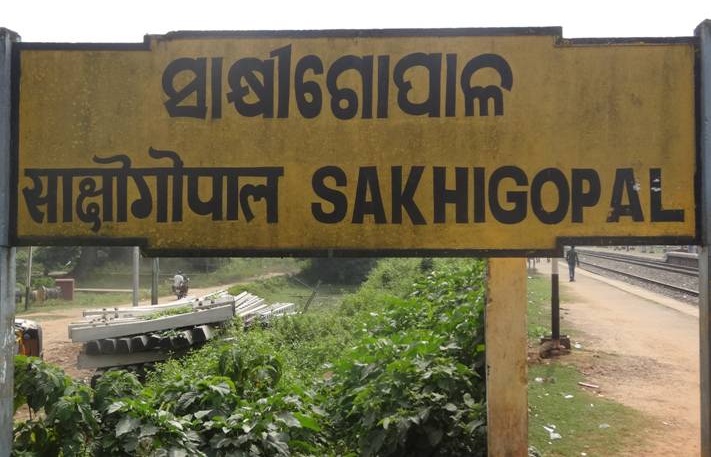
Saksi Gopala, Orissa
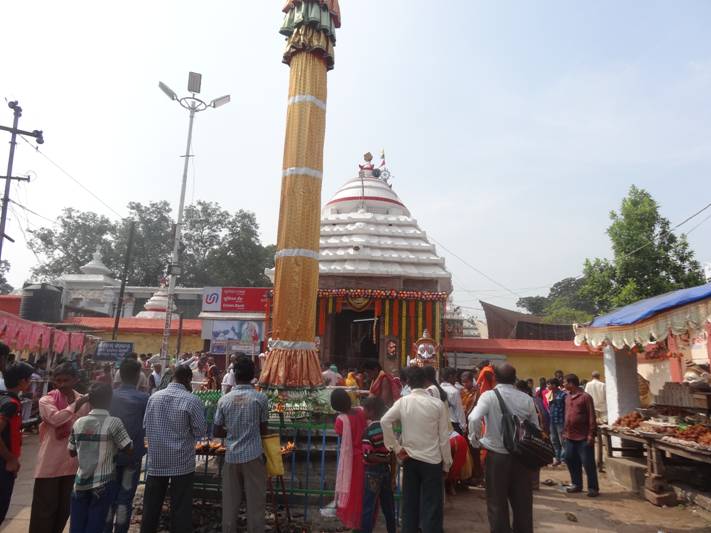
Entrance to Saksi
Gopala Temple
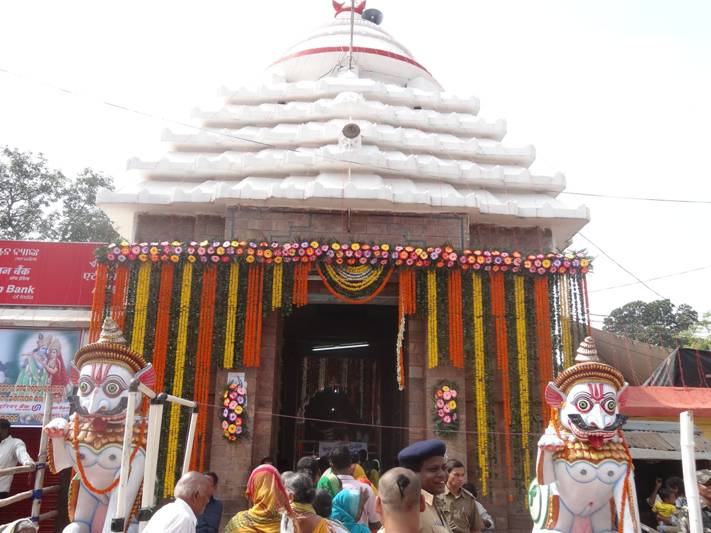
Saksi Gopala Temple
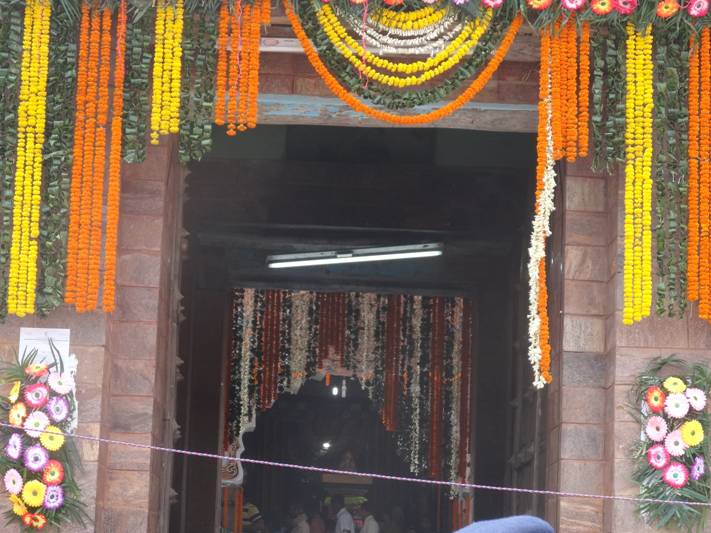
Saksi Gopala Temple
Their
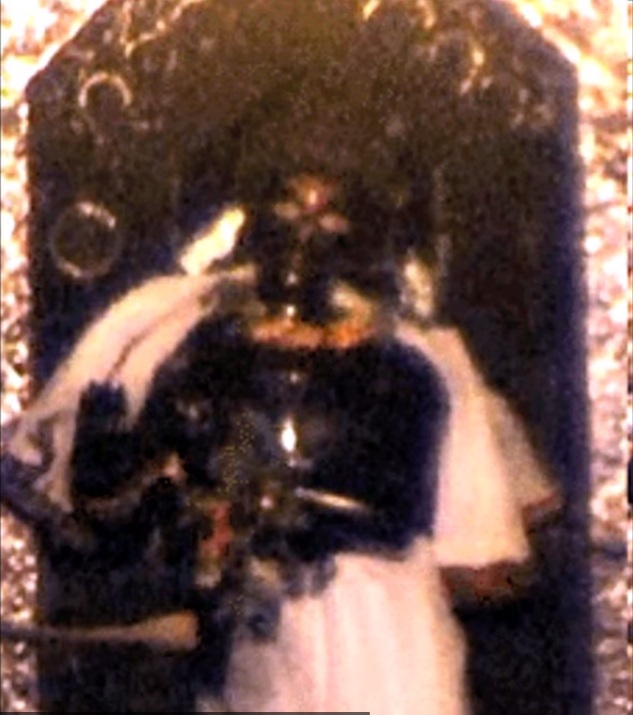
Lordship Sri Saksi Gopala at Saksi Gopala Temple
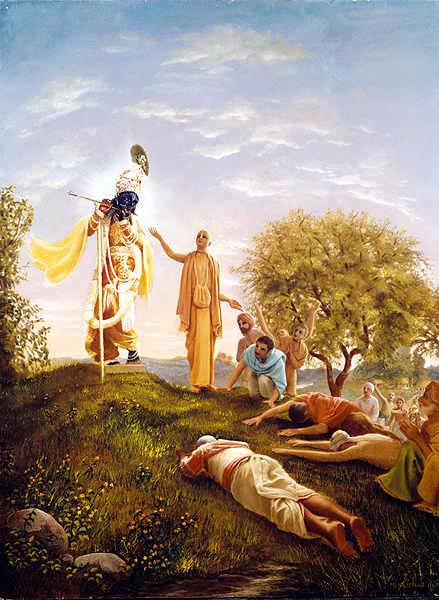
Saksi Gopala
The Deity Who Was Called
as a Witness
"The young brahmana then
went to the town and informed all the people about Gopala's
arrival. Hearing this, the people were struck with wonder. All the townspeople
went to see the witness Gopala, and when they saw the Lord actually standing
there, they all offered their respectful obeisances. When the people arrived,
they were very pleased to see the beauty of Gopala, and when they heard that He
had actually walked there, they were all surprised. Then the elderly brahmana, being
very pleased, came forward and immediately fell like a stick in front of Gopala.
Thus in the presence of all the townspeople, Lord Gopala bore witness that the
elderly brahmana
had offered his daughter in charity to the young brahmana."
After the marriage ceremony was performed, the Lord
informed both brahmanas,
“You two brahmanas
are My eternal servants, birth after birth.” The Lord
continued, “I have become very much pleased by the truthfulness of you both.
Now you can ask for a benediction.” Thus with great pleasure the two brahmanas
begged for a benediction. The brahmanas
said, “Please remain here so that people all over the world will know how
merciful You are to Your servants.”
Lord Gopala stayed,
and the two brahmanas
engaged in His service. After hearing of the incident, many people from
different countries began to come to see Gopala.
Eventually the King of that country heard this wonderful story, and he also
came to see Gopala and thus became very satisfied.
The King constructed a nice temple, and regular service was executed. Gopala
became very famous under the name of Saksi-gopala [the witness Gopala].
-Sri Caitanya-Caritamrita Madhya-lila chapter 5 verses 108-118
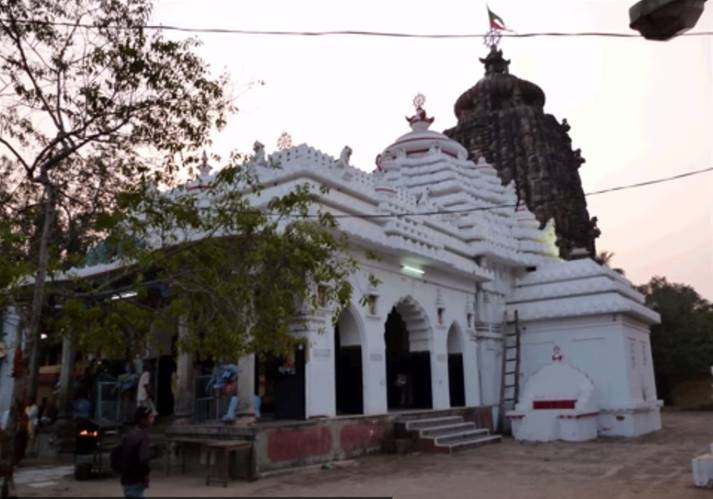
Saksi Gopala Temple
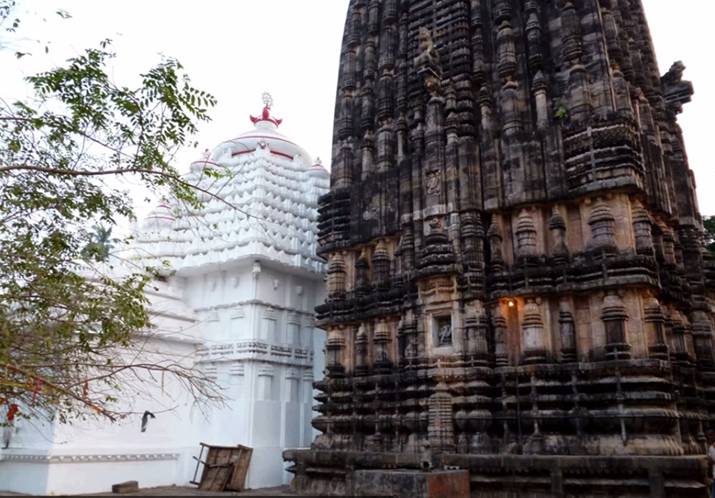
Saksi Gopala Temple
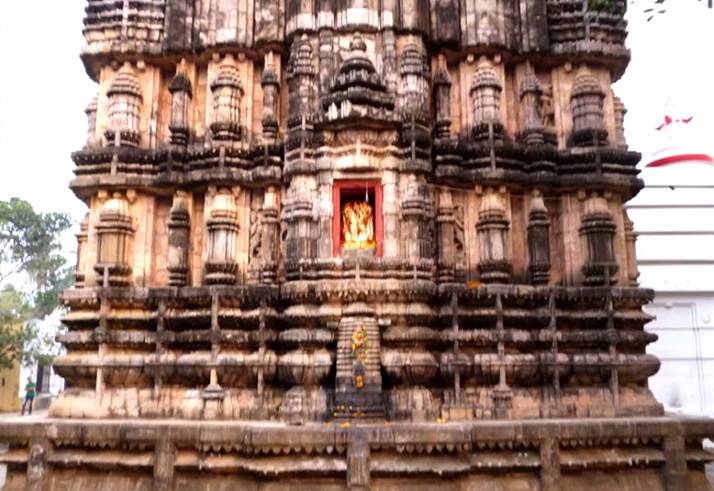
Saksi Gopala Temple
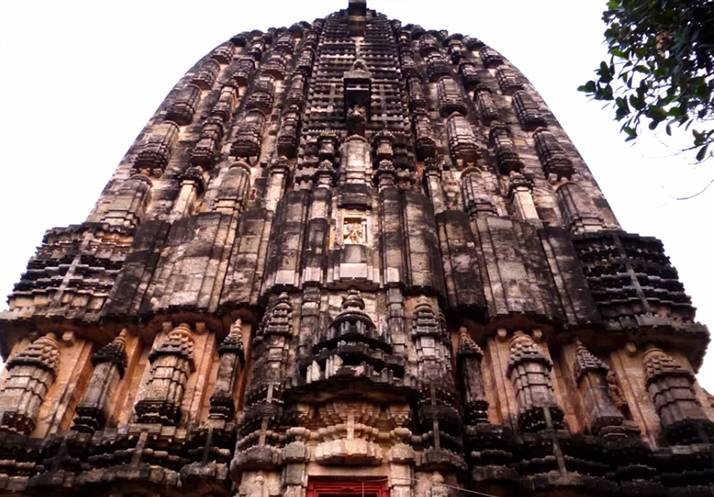
Saksi Gopala Temple
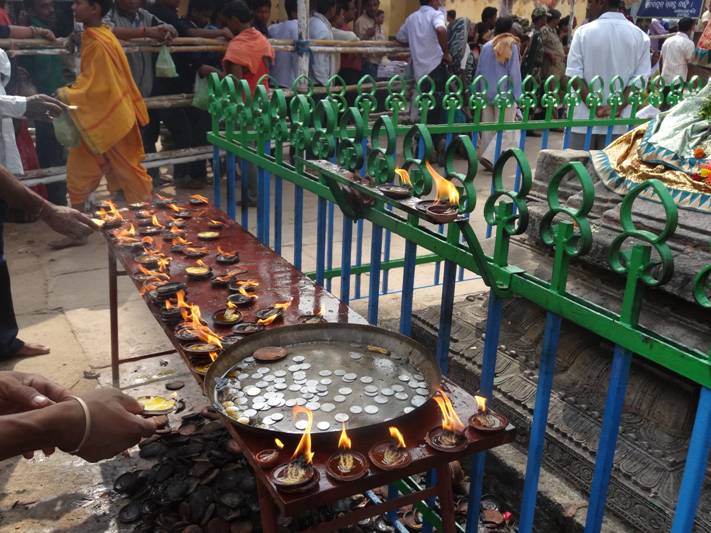
Saksi Gopala Temple
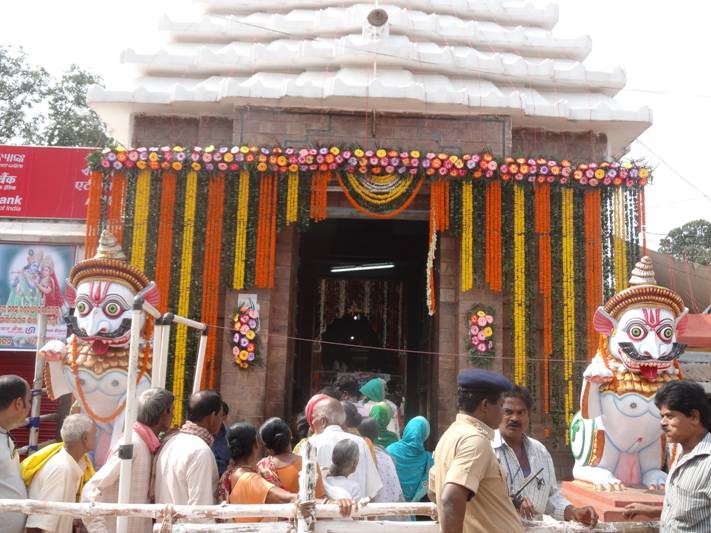
Saksi Gopala Temple
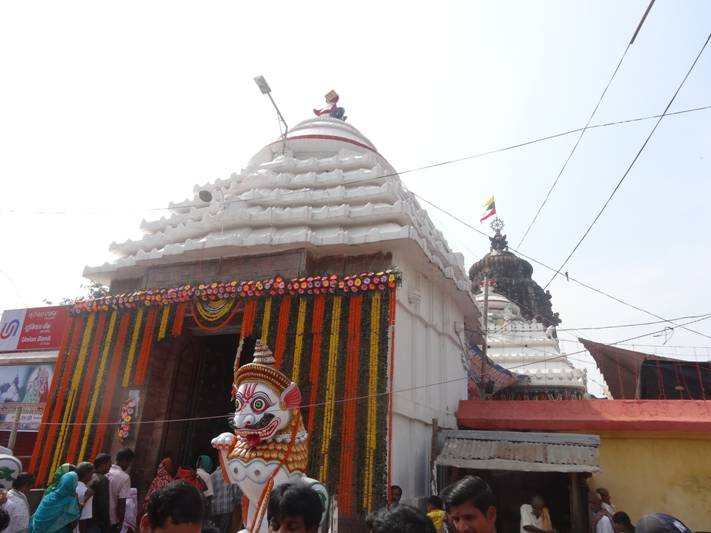
Saksi Gopala Temple
A great
fair is annually held here on the Anla Nabami day in the month of Kartika. Behind the temple there
is a nice forested land that belongs to the temple. Many medicinal and rare
plants are found there. Bakula Bana
of Panchasakha otherwise known as Banavidyalaya
is also situated here.
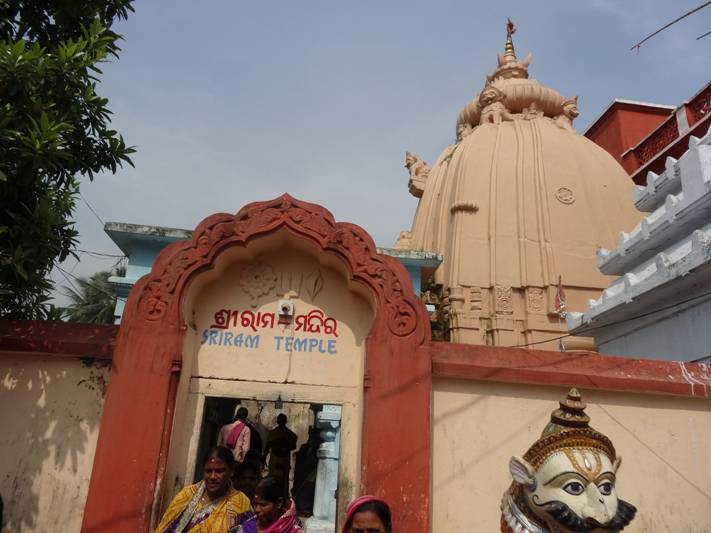
Ancient Sri Rama
Temple is next to Saksi Gopala Temple
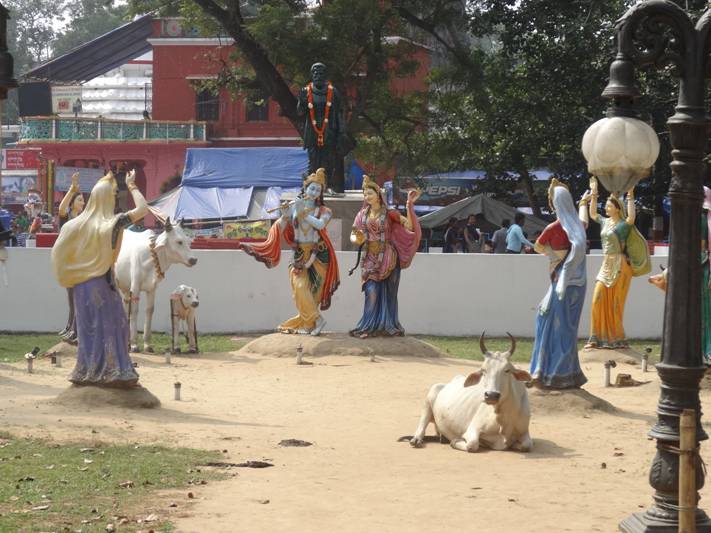
A nice park in front
of Saksi Gopala Temple
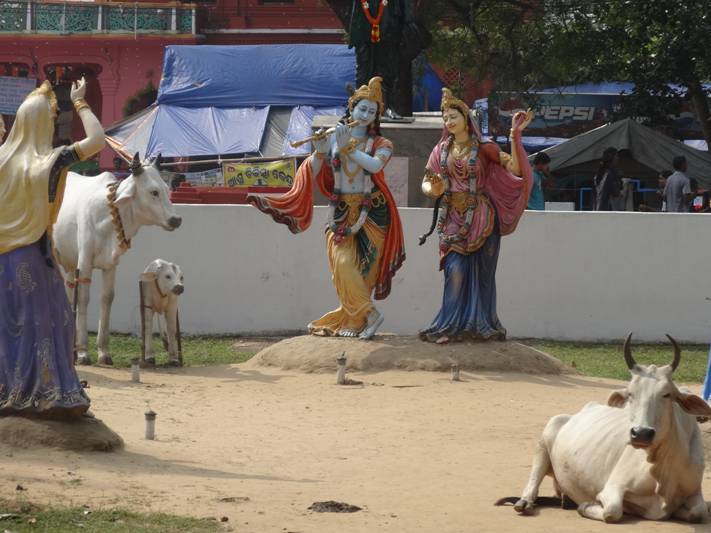
A nice park in front
of Saksi Gopala Temple
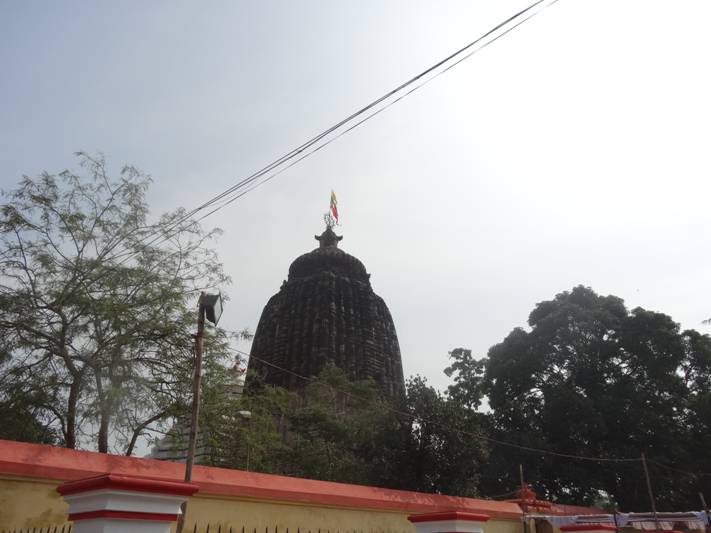
Saksi Gopala Temple
Directions to reach Saksi Gopala
Saksi
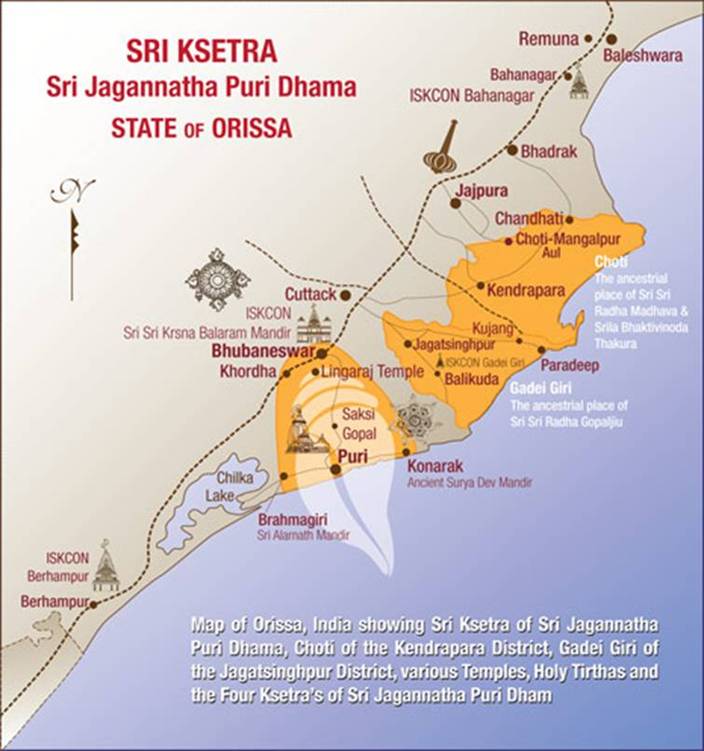
Gopala Temple is located almost midway between Jagannatha Puri Dhama and
Bhubaneswar, in a town called Saksi-gopala, about 20
km west of Jagannatha Puri Dhama. The temple is easily reachable by taxi, bus
or Puri-Bhubaneswar train. A new railway station called Saksi-gopala is there where people get off to visit the temple.
One can
also visit Saksi-gopala temple by attending annual
Sri Ksetra Jagannatha Puri Dhama Parikrama organized
by ISKCON Mayapur about a week after the Kartika masa (month) during the month of November/December.
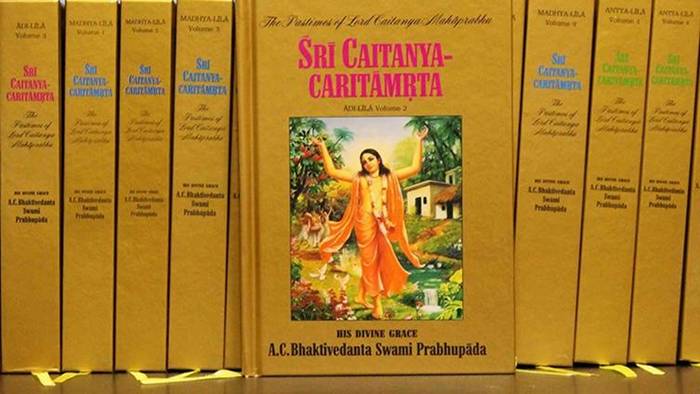
Sri Caitanya-caritamrta, by Srila
Krsnadasa Kaviraja
Gosvami, is
the principal work on the life and teachings of Sri
Krishna Caitanya Mahaprabhu, the
Supreme Personality of Godhead Himself in human form. It will not be inaccurate
to say that Sri Caitanya-caritamrta
is one of the most important works of historical and philosophical literature
ever written, in any language. Caitanya Mahaprabhu is
the pioneer of a great social and religious movement that began in India about
five hundred years ago and that has directly and indirectly influenced the
subsequent course of religious and philosophical thinking not only in India but
throughout the world. That Sri
Krishna Caitanya’s
influence has spread so far is due in large part to the efforts of His Divine
Grace A. C.
Bhaktivedanta Swami Prabhupada, the present work’s
translator and commentator and the founder and acarya
(spiritual guide) of the International Society for Krishna Consciousness.
At a time when, in the West, man was directing his explorative spirit toward
circumnavigating the world in search of new oceans and continents and toward
studying the structure of the physical universe, Sri Caitanya Mahaprabhu, in
the East, was inaugurating and masterminding a revolution directed inward,
toward a scientific understanding of the highest knowledge of man’s spiritual
nature.
Within His lifetime, Sri Caitanya Mahaprabhu transformed the face of India
in four respects: philosophically, by encountering, defeating and converting
the greatest philosophers and thinkers of His day; religiously, by organizing
the largest, most widespread theistic movement in India’s history; socially, by
His strong challenges against the religious inequities of the caste system;
politically, by His organization of a massive civil disobedience movement in
Bengal, more than four centuries before Gandhi.
Sri Caitanya-caritamrta
is divided into three sections, called “lilas”, a
word that literally means “pastimes”. The Adi-lila
traces Sri Caitanya Mahaprabhu’s life from birth
through His acceptance of the renounced order, sannyasa,
at the age of twenty-four. This part includes His childhood miracles,
schooling, marriage and early philosophical confrontations, as well as His
organization of the widespread sankirtana movement
and His civil disobedience against the repression of the Muslim government. The
Madhya-lila, the longest of the three sections,
contains a detailed narration of Sri Caitanya Mahaprabhu’s
extensive and eventful travels throughout India as a renounced mendicant,
teacher, spiritual preceptor and mystic. Finally, the Antya-lila
concerns the last eighteen years of Caitanya Mahaprabhu’s
manifest presence, spent in semi-seclusion in Jagannatha Puri, Orissa. During
these years, Sri Caitanya Mahaprabhu drifted deeper and deeper into trances of
spiritual ecstasy unparalleled in all of the religious and literary history,
Easter or Western.
The author of this great classic, Krsnadasa
Kaviraja Gosvami was
a great saint and confidential disciple of Raghunatha dasa Gosvami, the
renowned ascetic saint who was one of the most
intimate disciples of Sri Caitanya Mahaprabhu. Krsnadasa
Kaviraja began work on the text at a very
advanced age and in failing health, as he vividly describes in the text itself:
“I have now become too old and disturbed by invalidity. While writing, my hands
tremble. I cannot remember anything, nor can I see or hear properly. Still I
write, and this is a great wonder.” That he completed the greatest literary gem
of medieval India under such debilitating conditions is surely one of the
wonders of literary history.
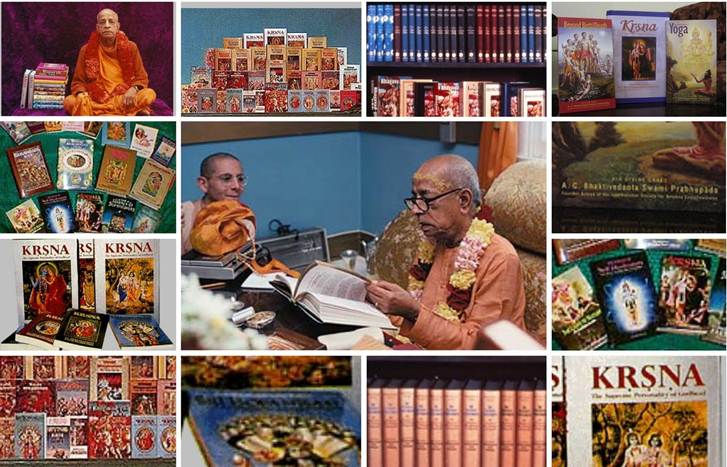
The English translation and commentary on Sri
Caitanya-caritamrta
is the work of His Divine Grace A.C. Bhaktivedanta Swami Prabhupada, the world’s
most distinguished scholar and teacher of Indian religious and philosophical
thought and author of the best-selling Bhagavad-Gita As It Is. He himself is a disciplic descendant of Sri Caitanya Mahaprabhu and his
intimate familiarity with the precepts Caitanya Mahaprabhu taught eminently
qualifies him to present this important classic to the English-speaking world.
The ease and clarity with which he expounds Sri Caitanya Mahaprabhu’s
teachings enable even a reader totally unfamiliar with Indian religious
tradition to understand and appreciate this profound and monumental work.
The entire text with commentary, presented in nine lavishly illustrated
volumes by Bhaktivedanta Book Trust (BBT), represents a contribution of major
importance to the intellectual, cultural and spiritual life of contemporary
man.
The
Activities of Saksi Gopala
Story
of Saksi Gopala by His Holiness Radhanath Swami Maharaj (audio)
Saksi Gopala drama (Hindi)
Sri Ksetra
Jagannatha Puri Dhama
Sri Khira
Chora Gopinatha Temple at Remuna
Holy Pilgrimages: www.holy-pilgrimages.com
Sri Saksi Gopala ki jaya!
Sri Gauranga Mahaprabhu ki jaya!
HARE KRISHNA HARE
KRISHNA KRISHNA KRISHNA
HARE HARE |
HARE RAMA HARE RAMA RAMA RAMA HARE HARE ||